Digital detox tips: simply switch off and be offline

Take your physical battery status just as seriously as that of your smartphone!

The world keeps turning even without smartphones! People spend an average of nine years of their lives staring at their smartphones. (January 4, 2021 Source: Internet)
Honestly, what would a dying person say about this? What a waste of time! Is humanity allowing real life to be stolen from it? Is it defenselessly at the mercy of programmers in the battle for every second and every click? "Digital detox" is the name of the counter-movement. Many want to shift into reverse, go back to analog, at least more often.

Talking to people, sensory perception of your surroundings. There are digital detox vacations, i.e. vacations without smartphones - but afterwards, many people carry on as before. If you want to reduce digital use in everyday life, you have to tackle a bigger problem: Changing habits!

"Every recognized error is a step forward."
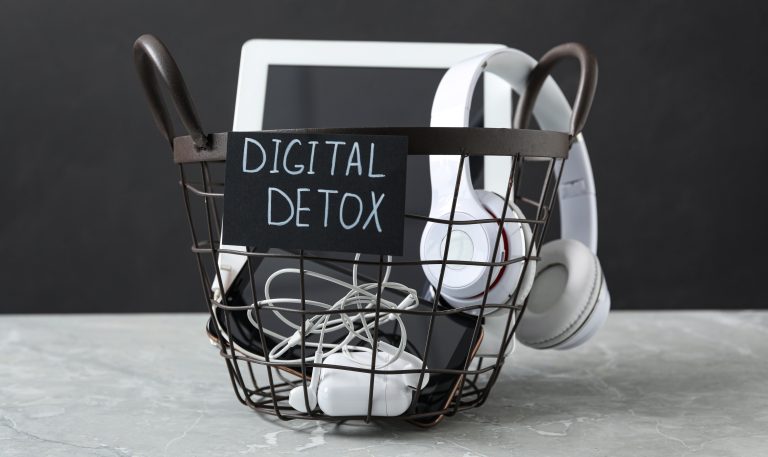
Here are a few digital detox tips:

  1. Outsourcing services: A smartphone is a practical alarm clock, it also tells you how much time is left until the alarm goes off in the morning. If you tend to check your social media after setting the alarm and then realize that your bedtime is 45 minutes shorter again, there is a solution: buy an alarm clock that does nothing but wake you up. Then you don't have to look at the display before going to sleep. You can outsource other functions. Use a wristwatch to tell the time.

  2. Fewer apps: Practically all apps include push notifications. If someone writes a message, a bomb explodes somewhere, someone likes the Instagram entry - the app icon constantly vibrates, rings and lights up. If you can't manage to avoid this curiosity, even though you actually have something else to do, there are several solutions: Silence your smartphone. Turn off push notifications. Uninstall apps

  3. Digital detox apps: Curiously, there are apps that are designed to help people limit their cell phone use. Quality Time, Mental or Auszeit record how often the user activates their smartphone and what they do with it. At the end of the day, there is a balance sheet. The apps are a means of self-awareness. And this is also the first step towards digital detoxification.

  4. Social norms: When people slip into digital stress as a result of using their smartphone, social reasons are usually a decisive factor. The feeling that you have to answer emails, text messages, etc. immediately.

  5. Smartphone-free time: Once the social pressure has been tamed, the smartphone can disappear from the environment at times. In the LMU Munich survey, 85% of users stated that they always have their smartphone to hand. Around a quarter carry it on their person almost around the clock. Suddenly going to the supermarket or restaurant without your device makes you feel naked. Not being able to at least check the display at all times is extremely unsettling. For people who suffer from constant accessibility, however, it has a liberating effect after a while. Because once you have it in your hand again, it becomes clear that the world really does go on turning. And even if a message came in, it could easily wait to be read and answered.

  6. Smartphone-free rooms: The next step is to create smartphone-free zones at home. The bedroom is an obvious choice. Or the dining table—what could be more annoying and rude than constantly staring at your phone at the dinner table? This is particularly disturbing for children. In his book "Jetzt pack doch mal das Handy weg" (Put your phone away now), author Thomas Feibel describes wonderfully how much children are sometimes annoyed by their parents when they are constantly absorbed in their smartphones. So much for role models!

  7. Airplane mode, switch off: If you simply can't keep your hands off your smartphone, you can of course trick yourself and create an additional hurdle by cutting off your internet connection. If your phone is in airplane mode, you have to tap away at your smartphone a lot more to check what's going on in the world of social media. The inhibition threshold is then often too high, so it disappears back into your pocket. Even tougher on yourself is recognizing that there are actually buttons that turn off a smartphone. In the end, people may succeed in regulating their use of their extremely practical smartphones in such a way that it does not make them unhappy. Or at least that they do not endanger themselves and others when using them. Most recently, the German Federal Ministry of Transport's "Slow Down" campaign lamented: "Distractions in traffic, especially from cell phones, can be life-threatening." According to a survey, 36 percent of road users have already found themselves in a dangerous situation due to smartphone use—and seven percent have even been involved in an accident.

The Physiotherm infrared cabin is a wonderful retreat for a cell phone-free break to simply switch off.

The mobile phone-free zone in the Physiotherm cabin is ideal for this.
Our brain cannot do 2 things at the same time
When we develop our senses (sight, smell, hearing, taste, touch), we cannot brood at the same time.
Enjoy the Physiotherm infrared cabin:
Aromas, colored light, sunlight and music in combination with the unique Sensocare infrared technology.
The start of autumn, with its shorter days and cooler temperatures, invites you to linger over a sensory experience.

Text: Nina Lorenz - Physiotherm international sales coordination and certified mental and business mental trainer and nature therapist

Physiotherm Consultation

We'll help you choose the right infrared heating solution—because your HEALTH matters!

We’ll answer all your questions. Schedule a brief, no-obligation consultation with our experts to learn more about model selection, how the systems work, and available options.